Real Property Law at 250: Where do we go next?
/I recently visited New England and for the first time I saw cranberry farms near the site where the Mayflower landed. The fields are low, flat, surrounded by ditches and well irrigated. Cranberry farming is far cry from the wide-open dryland wheat fields and pastures I grew up around. The visit left me thinking about how US agriculture—just like the US population—has grown from small-subsistence farming to becoming one of the world’s largest breadbaskets. As America turns 250, here are my thoughts about how real property law helped create the US farmland we know today.
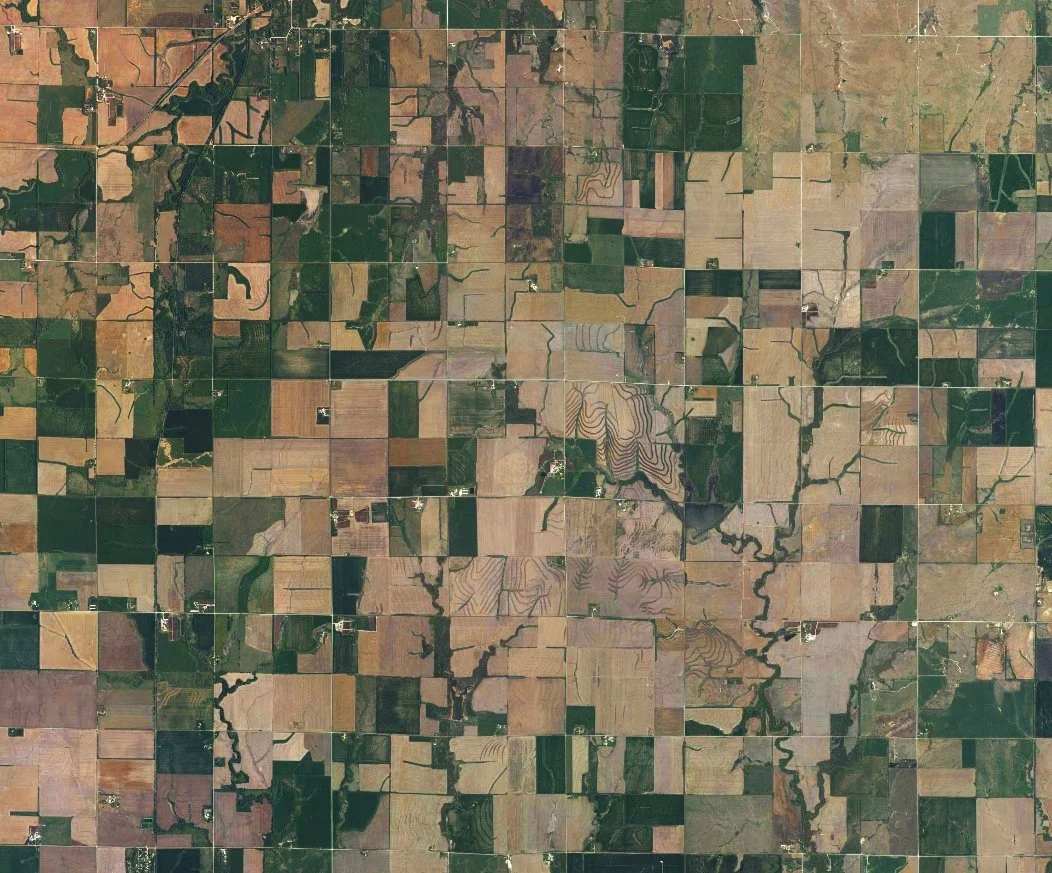
America was a land of expansion for the first 150 years of its existence. Thomas Jefferson and other founders realized very early in the USA’s existence that an orderly means for dividing and owning property was necessary for the young country. Congress passed the Land Ordinance of 1785 (even before the US Constitution was ratified) that created the system that surveyed land and divided into six-mile square townships, each containing 36 one-mile square sections of 640 acres. Section 16 was reserved for a public school. I have heard that over 75% of the continental United States is divided according to the framework established by the Land Ordinance of 1785.

Mayflower II, replica of the original Mayflower.
Nearly 100 years later, the Homestead Act of 1862 built on this framework. Signed into law by President Lincoln, the Homestead allowed persons to claim up to 160 acres of undeveloped land by building a dwelling and improving the land for five years. After five years, the settler could obtain a deed from the federal government for the land. If you have ever done a title search on property back to its beginning, you will find the search ends with this grant.
Any midwestern lawyer practicing real property law is familiar with the legacies created by these two acts. In most instances, real property descriptions in deeds, mortgages, and other conveyance documents still use the same terms for describing the boundaries of property as they did in Jefferson’s day, e.g., “Start at the point of beginning at the southwest corner of township 17, thence 100 feet west, etc.” The system is not perfect, but it has worked and survived nearly 250 years.
But that begs the question whether the system for describing and conveying land interests will survive for another 250 years? Other areas of the law have modernized over the last two centuries. Commercial law developed the Uniform Commercial Code to help standardize the inherited English Common Law used to interpret contracts. Patent, copyright, and trademark law have evolved over the years to recognize new technologies and media. Tort law is constantly evolving. But real property law has largely held on to its legacy. Not only do we still describe land using Jefferson-era surveying language, but we still refer to lessors at “Landlords” and renters as “Tenants.” These are holdovers from feudal England.
With modern GPS, there is no need to rely on old survey methods to describe property. With digital technology, there is no need to rely on old, county-based filing systems to record deed and other interests in property. In contrast to buying a parcel of land valued at $50,000, buying a $50,000 car does not require a title search, title insurance, or thousands of dollars of “closing costs.” If Jefferson’s era leaders could build a property system from scratch, surely we can reimagine the same system for the digital age.