
Protecting Property Rights: the Conservancy District Version
/“Notice” is a frequently used concept in the legal world. How do you give notice to a defendant of a lawsuit? For a zoning hearing, how do you satisfy the notice requirements — individual mailed notices and publication notice? How should a county give notice of a larger scale zoning ordinance or map change? We even negotiate notice provisions in option agreements and solar contracts. But what do notice requirements mean in the context of a conservancy district? In a recent win for our client, the Court of Appeals confirmed the importance of clearly identifying and notifying property owners before including them in such a district and deferred to the trial court’s factual findings.
In In re Establishment of the Lake of the Woods of Marshall County Conservancy District, the petitioners filed a petition for the creation of a conservancy district to include “any and all parcels of real estate having frontage on Lake of the Woods and/or the channels associated therewith.” The petitioners filed signatures in support of the district and eventually submitted the following map of the proposed district:
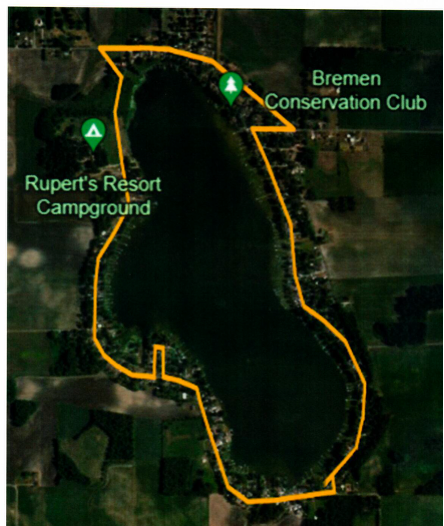
Another group of property owners moved to dismiss the proposed District, contending that (1) they had submitted signatures from at least 51% of the property owners in the proposed District who opposed the District, requiring dismissal under I.C. 14-2-33-15; (2) because the petitioners did not clearly indicate which properties were included in the District, many property owners did not receive adequate notice of the petition and in fact still did not know whether they would be included in the District; and (3) the properties purportedly included in the District were not contiguous, as required by Indiana law.
The trial court ruled in favor of the opposition property owners. The court concluded the petitioners had not sufficiently established the boundaries of the District or the particular landowners whose properties would be included in the proposed District. The trial court also concluded that the opposition property owners had submitted signatures from 51.85% of the freeholders in the District, which triggered dismissal under the statute.
On appeal, the petitioners argued the opposition property owners failed to meet their burden on their request to dismiss the District. The Court of Appeals explained that petitioners’ argument “missed the mark” because the question was simply whether the opposition had signatures from at least 51% of the impacted freeholders in the proposed District. In part because the map submitted by the petitioners was “vague at best” and provided no details regarding addresses or parcel numbers, it was impossible for the Court to ascertain which signatures were properly counted as being “in” or “out” for the proposed District. The Court of Appeals deferred to the trial court’s fact finding and evidence weighing, and ultimately affirmed the trial court’s order dismissing the proposed District.
This decision matters beyond the realm of conservancy districts for a few reasons. First and foremost, the case highlights the fundamental importance of giving notice before impacting private property rights. The maps and descriptions of the proposed District were simply unclear as to which properties were “in” or “out,” meaning those landowners would not know (nor could the Court know) whether they were to be included in the proposed District. Without notice, those landowners would not know to participate in a case, to attend a hearing, or to submit a signature in opposition or support of the proposed District. The same concept holds true for other types of notice impacting property rights, including zoning, righ-of-way construction, lawsuits, and real property transfers. Without notice, a party misses their opportunity to exercise all the other rights in their bundle of sticks. Second, and just as important, we can see the obvious deference the Court of Appeals gives to trial courts when considering factual findings. Here, the trial court considered stacks of paper representing signatures in favor or in opposition to the proposed district, as well as maps, spreadsheets, revocations of signatures, and revocations of revocations. The trial court was in the position to weigh the conflicting evidence and the Court of Appeals will not lightly disturb such a factual finding.
On April 8, 2026, the petitioners filed a request that the Indiana Supreme Court accept transfer of this case to vacate the Court of Appeals’ decision. We will continue to monitor the matter for additional updates.